
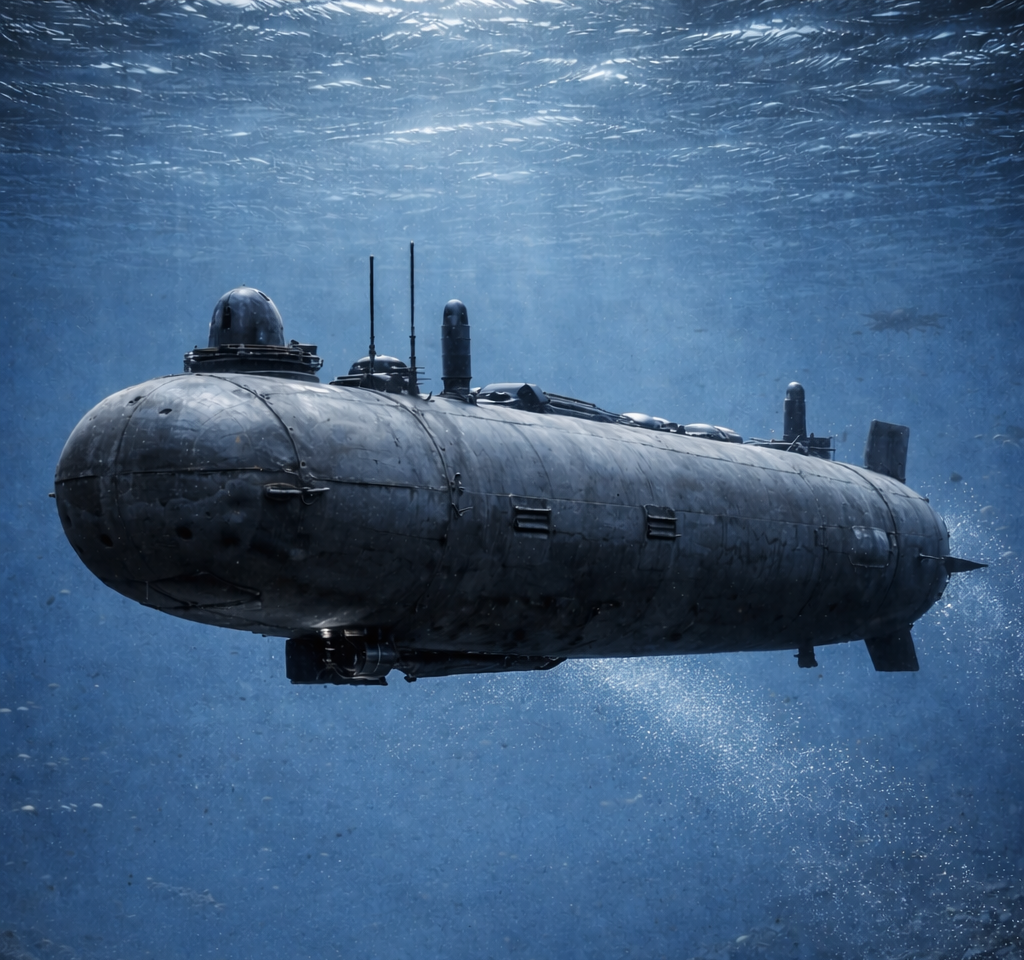
Unmanned Underwater Vehicles (UUVs) exhibit high and highly variable power demands across a wide range of mission profiles and endurance requirements. Nimbus fuel cell systems are configurable to match the required electrical power level, while overall mission endurance is determined primarily by onboard fuel storage rather than installed power hardware.
In contrast, battery-only architectures scale endurance by increasing battery mass and volume, which quickly becomes prohibitive in space-constrained UUV platforms. As mission duration increases, batteries impose steep penalties in volumetric energy density, payload displacement, and vehicle mass.
Fuel cells decouple power output from energy storage, enabling long-duration missions without a proportional increase in system volume or weight. Nimbus fuel cells are ruggedized, gravity-independent, and capable of continuous electrical output, making them well suited for UUV missions with the most demanding endurance, stealth, and reliability requirements.