
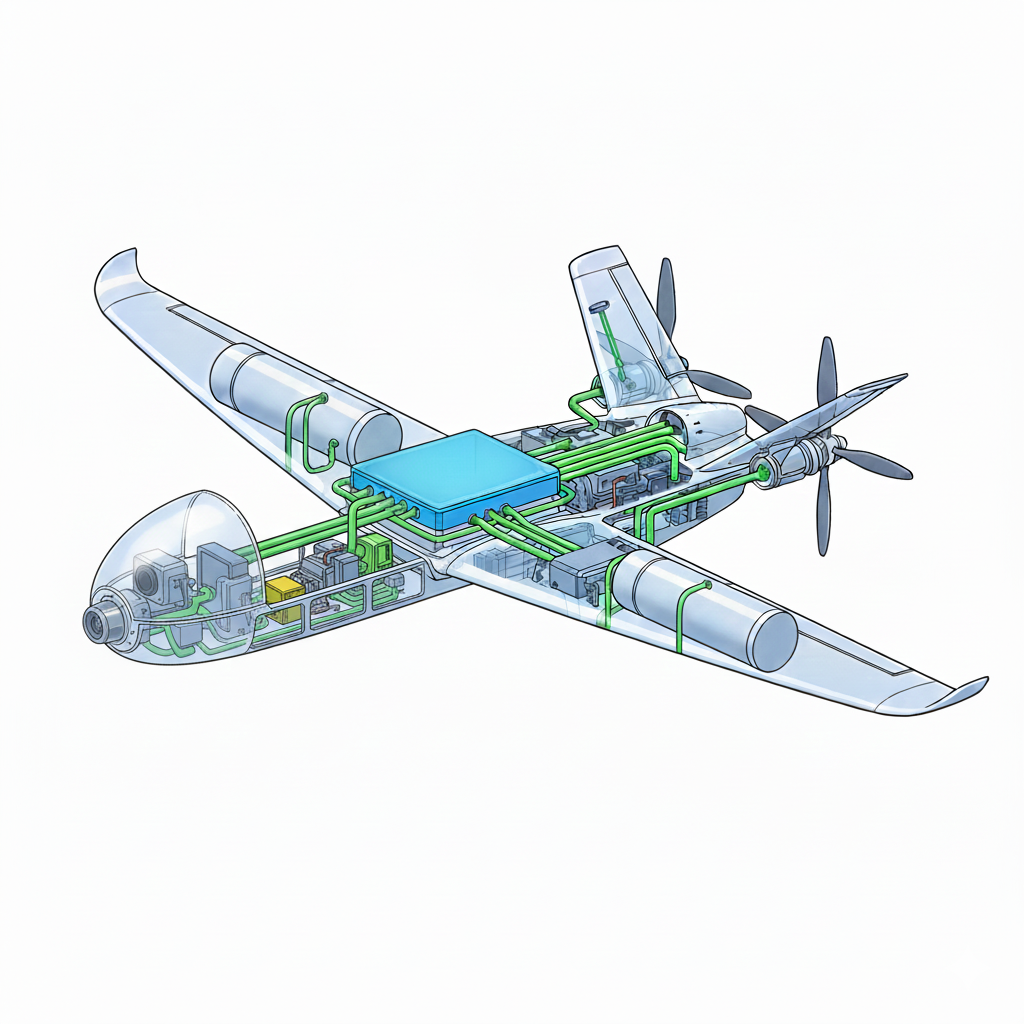
Unmanned Aerial Vehicles are fundamentally constrained by mass, making power system weight one of the most critical drivers of range, endurance, and payload capacity. Nimbus fuel cell systems are engineered to deliver industry-leading power output per unit mass, enabling UAV platforms to achieve significantly longer mission endurance without sacrificing payload or performance.
Unlike battery-based systems, which scale energy capacity through proportional increases in weight, Nimbus fuel cells decouple power generation from energy storage. Electrical power is produced continuously from onboard fuel, allowing endurance to scale with fuel quantity while maintaining a lightweight power generation architecture. This results in substantially higher effective specific energy at the system level compared to batteries, particularly for long-duration missions.
The high gravimetric efficiency of Nimbus fuel cells enables UAV designers to either extend flight time, increase payload mass, or reduce overall vehicle size. This advantage is especially impactful for ISR, communications relay, and long-endurance surveillance missions where persistent airborne presence is required.
Nimbus fuel cells are compact, vibration-tolerant, and capable of steady-state electrical output, providing a reliable and efficient power solution for UAVs operating at the limits of endurance. By maximizing power output per unit weight, Nimbus fuel cells directly translate into greater mission flexibility, expanded operational envelopes, and improved platform survivability.